
Although the wider history of modern allotments is well documented, very little has been written about the story of Chesham’s own sites. Even after extensive research through local archives, newspapers and libraries, only a handful of materials have been found — brief written references, a few photographs, a couple of maps and two recorded oral histories.
The beginning of the Cameron Road allotments
One of the most valuable discoveries in researching the history of Chesham’s allotments comes from a 1994 publication by local historians Arnold Baines (former Mayor) and Clive Birch, A Chesham Century: The Story of a Town and its Council 1894–1994. In it, they describe how the Cameron Road allotments first came into being.
For many years, Chesham had allotments in Bellingdon Road — often troubled by roaming poultry — as well as plots provided by the Duke of Bedford’s Trust in Waterside. Even so, demand for allotment land remained unmet.
That changed in June 1909, when Taylor’s Farm, the land now occupied by Cameron Road allotments, was put up for sale. The night before the auction, the Council met and authorised the chairman, George Wallington, along with two other members, to bid for the entire farm if possible, or for selected lots if not. They succeeded — though they did so at personal financial risk until the Council could secure a loan to cover the purchase.

The Local Government Board was not immediately convinced by the Council’s plans. In particular, they questioned the need for a depot that the Surveyor hoped to place in the old farmyard off what is now Cameron Road. As a result, the Board initially refused to grant sanction for the purchase. The vendor then threatened legal action against the councillors who had bid at the auction if the sale did not go through — a serious concern, especially as the Council itself was split almost evenly, 8 or 9 in favour and 7 or 8 against.
To protect the purchase, the majority agreed that the land should be temporarily conveyed to five named councillors until the Council could formally take ownership. Those willing to do so signed a bond to reassure their colleagues.
The issue quickly became one of public interest. Printed circulars were delivered to households north of the Town Hall, and around 200 ratepayers and residents attended a meeting at Townsend Road School. The turnout made it clear that there was strong demand among working people for new allotments, with proposed rents ranging from 3d to 9d per pole depending on location.
On 25 February 1910, three councillors and the Surveyor travelled to meet officials at the Local Government Board, despite receiving a telegram suggesting that written representations would be preferred. Their determination reflected the strength of local feeling and the importance placed on securing the land for allotments.
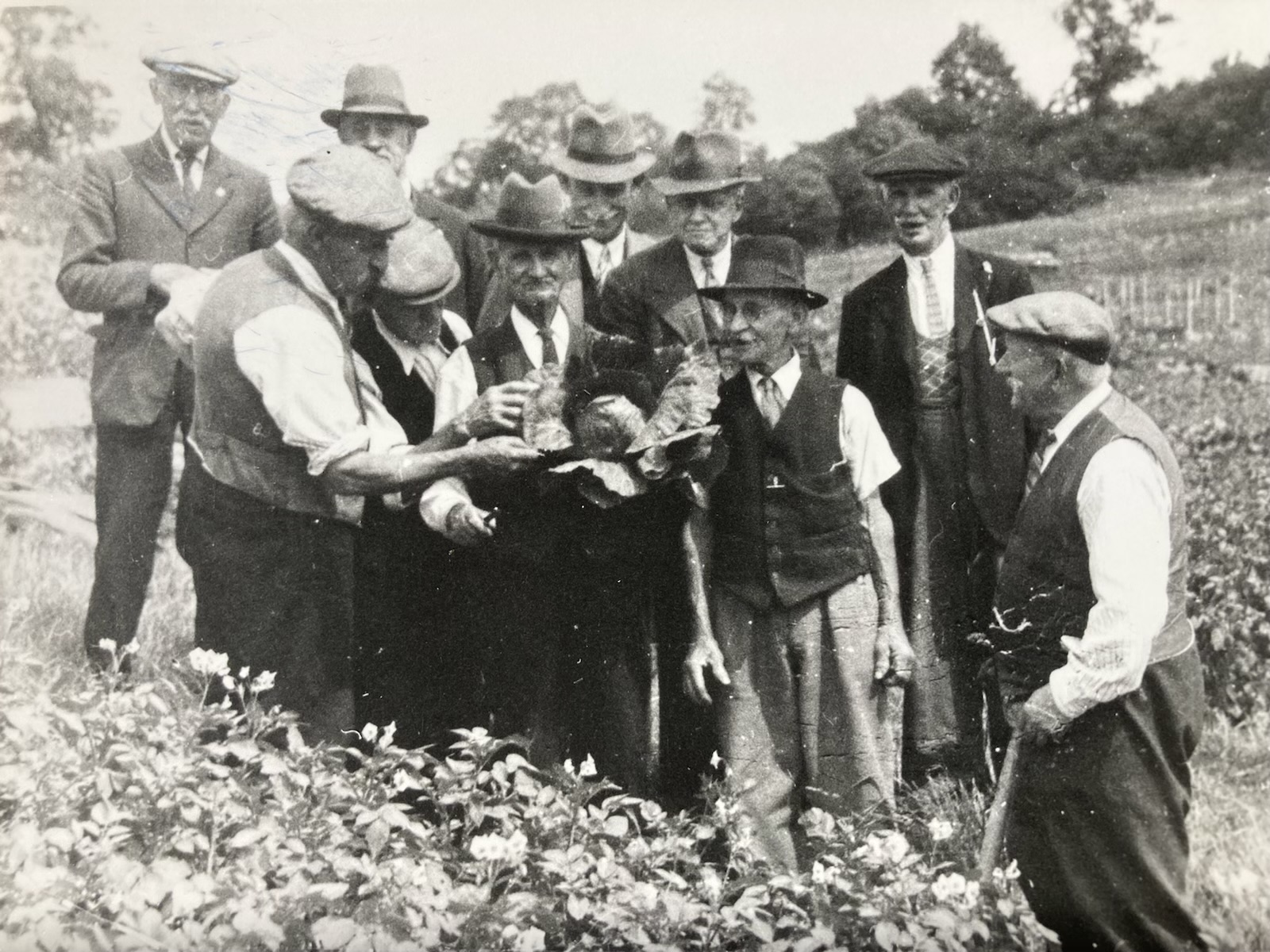
During discussions with the Local Government Board, one officer eventually acknowledged that the case appeared stronger than previously presented. Encouraged, the deputation went on to the House of Commons to seek support from Lionel de Rothschild, the MP for Mid‑Bucks. He took the matter directly to the Rt. Hon. John Burns, the first working man to enter the Cabinet and then President of the Local Government Board.
Burns requested a special report from his officials. A few days later, when the Council met, the Chairman sent a prepaid telegram to the Board asking for a decision. The reply arrived on the Friday: the purchase was sanctioned, and the land was secured in time for cultivation to begin by Easter.
Administration of the new allotments was placed under the Highways Committee. A proposal to create a dedicated Allotments Committee was put forward but failed on a tied vote. Tenant representation in the management of the allotments did not become formalised until 1953.
To the Surveyor’s disappointment, the farmhouse and yard were sold separately to the local firm Jesse Mead for use as a builder’s yard. The land adjoining Khartoum (now Eskdale) Avenue was also sold as surplus to requirements. Although it could have been let out — and still remains an orchard today — the Council now had around 150 satisfied allotment holders. They quickly formed a lively association, which continues the tradition of inviting the Town Mayor to present trophies at its annual autumn show.
Earlier in this article, we noted that allotments had long existed on Bellingdon Road and Waterside Road. However, our research has not uncovered any surviving records or photographs that shed further light on their history. Work to discover, preserve, and share the story of Chesham’s allotments is ongoing, and any help with sources, oral histories, or photographs would be greatly appreciated.